

Protecting Wealth During Cognitive Decline
Michael, 43 years old, California
SITUATION
Families often prepare financially for the future, but far fewer prepare for the risk of someone retaining access to significant wealth while gradually losing the judgment required to manage it safely. Recently, Wellworth worked with a client experiencing intermittent cognitive decline following a medical event. At times, he appeared cognitively intact. At others, his decision-making became impulsive and unpredictable. The concern was not simply medical, but operational: the client remained fully capable of initiating major financial decisions without fully understanding the consequences. Like many families, the risk was compounded by the fact that healthcare providers, financial advisors, and legal professionals often operate independently from one another.
SUPPORT
Collaborative Planning Model
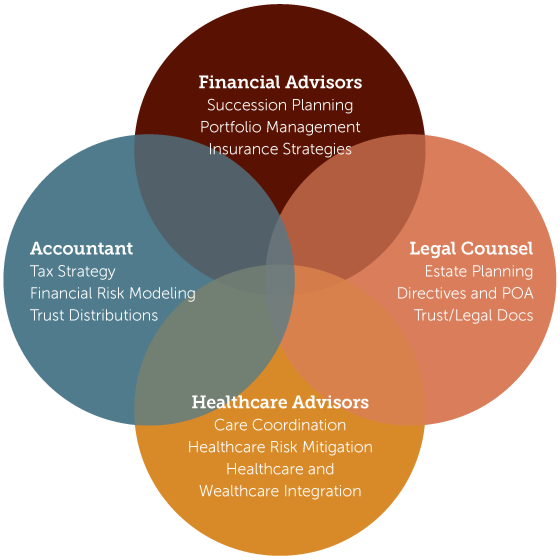
Before the situation escalated, a coordinated plan had already been established between the healthcare advisory team, the client’s family, and the wealth management professionals overseeing financial activity.
Clear protocols were discussed in advance:
Routine expenses would continue uninterrupted.
Extraordinary financial requests would trigger additional review.
The healthcare team would communicate meaningful changes in cognitive status.
The financial team would temporarily scrutinize unusual activity during periods of impairment.
The goal was not to remove autonomy, but to preserve stability while protecting the client during periods of diminished judgment. At Wellworth, we view effective planning as a coordinated relationship between healthcare advisory, wealth management, and legal infrastructure — particularly during moments of medical uncertainty.
OUTCOME
Because a coordinated system had already been established, the family and advisory teams were able to respond quickly as the client’s condition evolved. Potentially harmful financial activity could be reviewed before major decisions were finalized, while the client’s day-to-day life continued with minimal disruption. The case reinforced the importance of aligning healthcare advisory, wealth management, and legal planning before cognitive decline becomes a crisis — particularly as impaired judgment increasingly creates both medical and financial risk.